Key Takeaways
- Auto Nesting is the best choice for DTF printing as it offers faster workflows, lower costs and minimal film waste.
- Manual nesting offers control, but it’s slow & error-prone, practical for very small, highly customized print jobs.
- AI-powered nesting significantly reduces human errors like overlaps and uneven spacing.
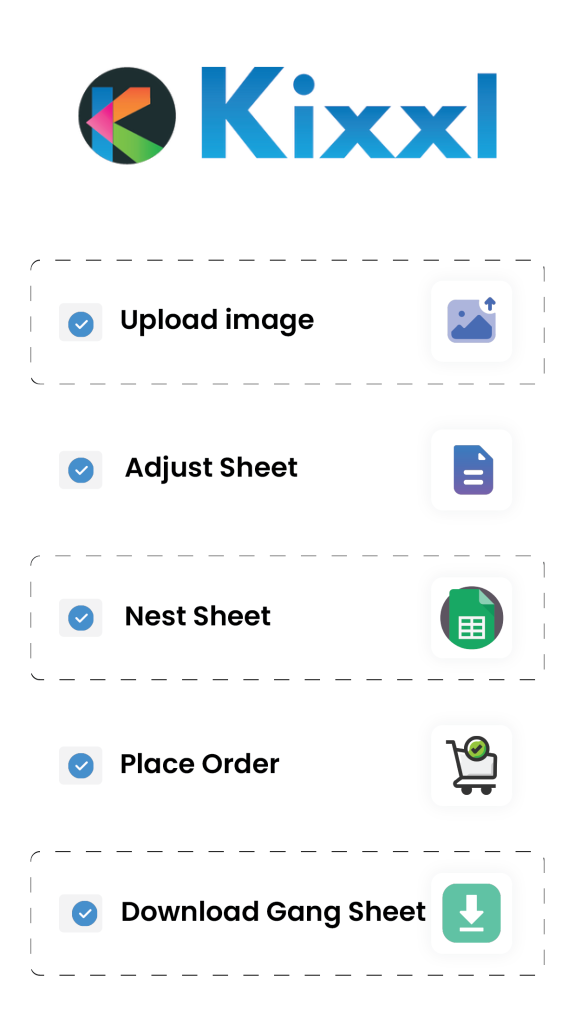
- Tools like Kixxl simplify DTF printing by automating the whole nesting process into a one-click step.
Introduction
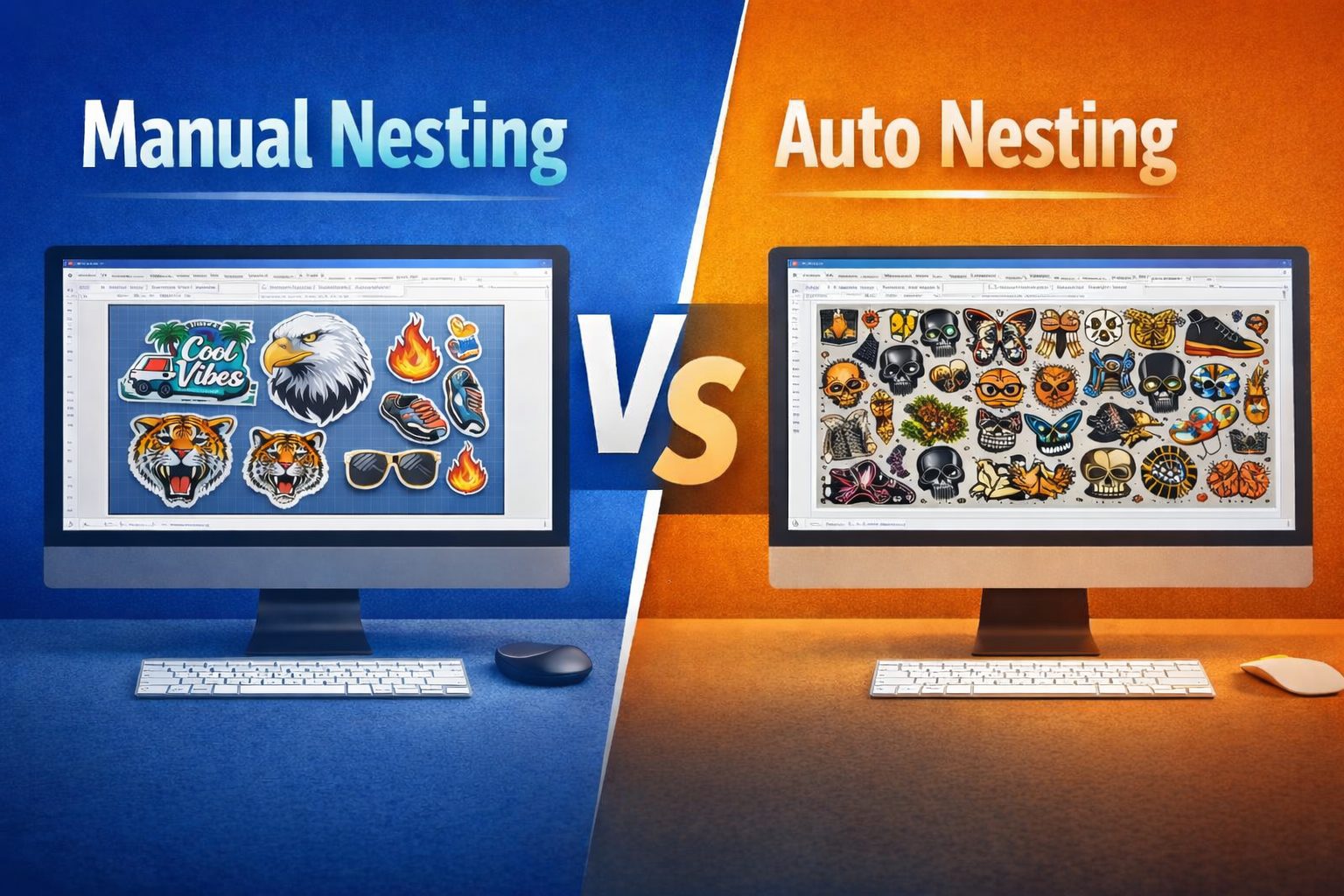
For most DTF print jobs in 2026, Auto Nesting is better than Manual Nesting. Though manual nesting gives you control all over, it is slow and leads to expensive material waste. That’s what makes Auto nesting a priority for the DTF business owners.
Since automation became a standard in the DTF industry, the gang sheets have become a core part of modern workflows, whether you are running a small Shopify store or a high-volume print house. It allows you to group multiple designs onto a single roll of film, which saves money and time.
However, how you arrange those designs on gangsheet, which is the actual nesting process, can make or break your profit margins.
While some still do this manually, using a dedicated auto nesting gangsheet tool like Kixxl has become the game-changer for modern printers who want maximum efficiency.
What Does Nesting Mean In Printing?
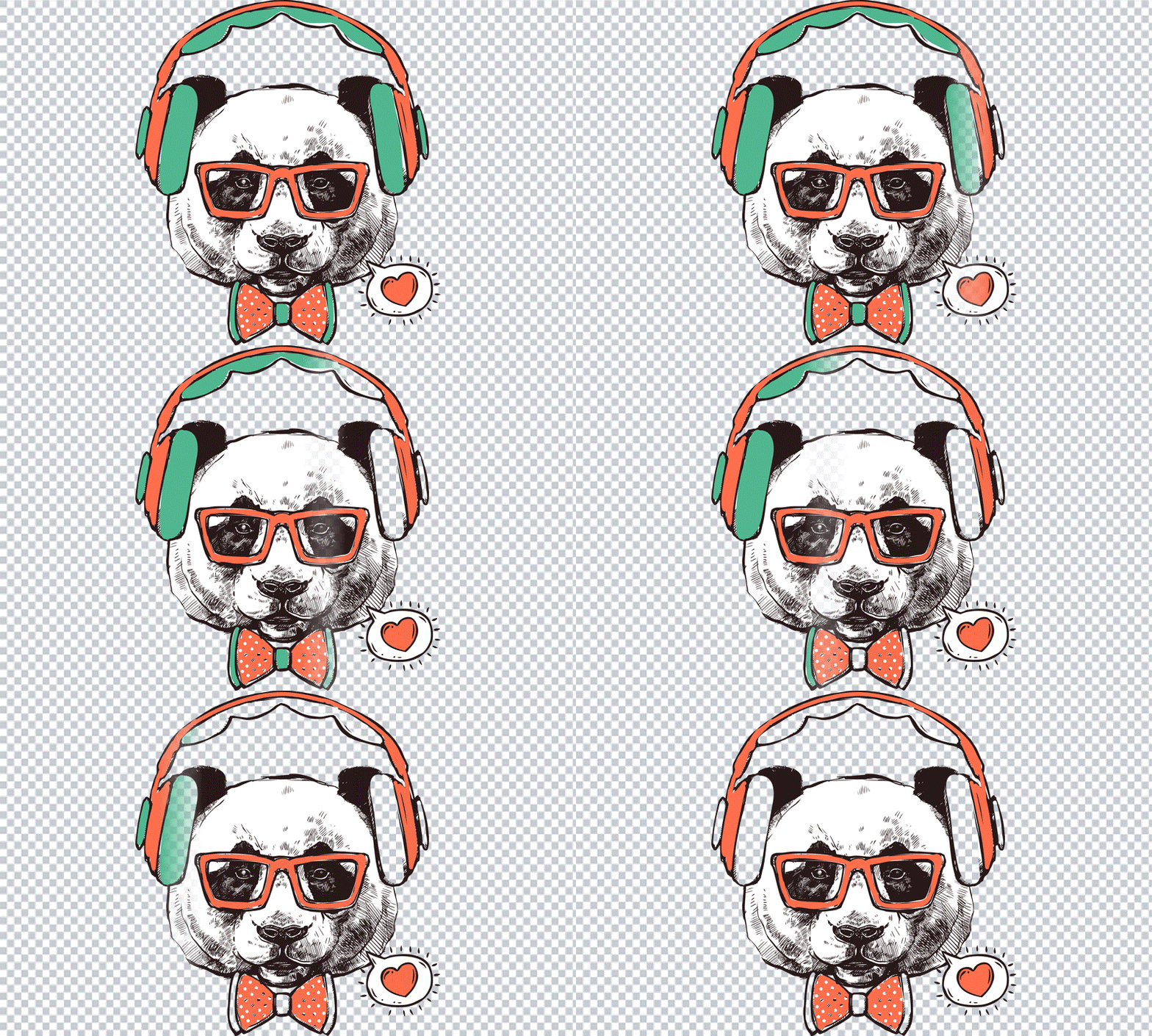
Nesting is simply the process of arranging various designs, logos, or artworks on a printing sheet while utilizing as much space as possible on it. The goal is to place designs tightly with minimal gaps, without interrupting the design manner. Moreover, to reduce wasted film and ink, and speed up the production process.
Nesting can be done in two ways:
- Manual Nesting: You use design softwares like Photoshop or Illustrator to move, rotate, and place each image by hand.
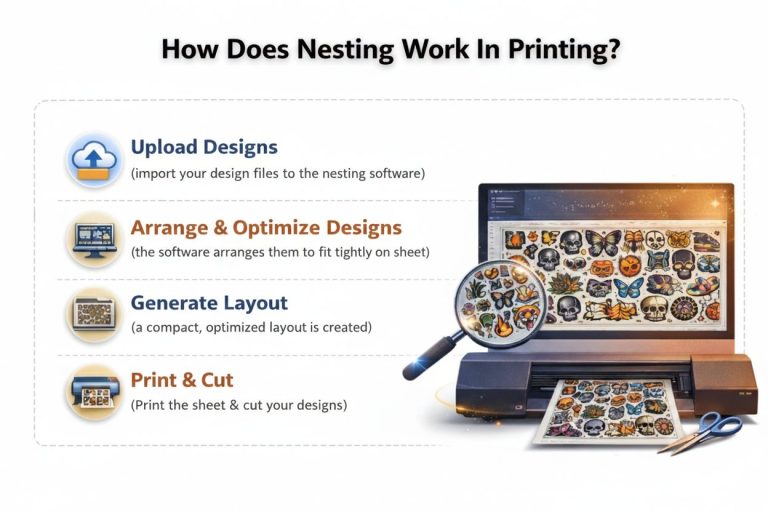
- Auto Nesting: You upload your files to a specialized tool, and an algorithm automatically places them into the most efficient layout possible.
Why Nesting Matters For DTF Jobs?
DTF film and ink are expensive. Every unused centimeter on a gang sheet is money left on the table. Automated nesting can boost material utilization up to 20% compared to manual layout methods.
This means auto nesting gangsheet tools not only save you material but also reduce overall printing cost per design, which gives print shops a strong edge when dealing with bulk orders and tight margins.
Manual Nesting: The Old School Approach
Manual nesting gives operators complete freedom to place each design on the sheet exactly where needed. You can adjust margins, orientation, and spacing. Also, it helps in keeping track of layout efficiency. However, manual nesting works best when you’re printing a very small batch and designs are highly varied or irregular.
The Pros:
- Total Control: You can decide exactly where every logo or design goes.
- No Extra Software required: If you are a pro at Photoshop, you don’t need to learn a new tool.
The Cons:
- Slow and Tedious: Arranging 50 different logos on a 10-foot roll can take an hour or more.
- Error-prone: It is easy to accidentally overlap designs or leave too much gap, which wastes film.
Auto-Nesting: Faster, Smarter, Better
Auto-nesting uses Artificial Intelligence to optimize space on the sheet. Tools like Kixxl have become the gold standard because they remove the guesswork from the process, delivering consistent results every time.
Top 5 Benefits of Auto-Nesting
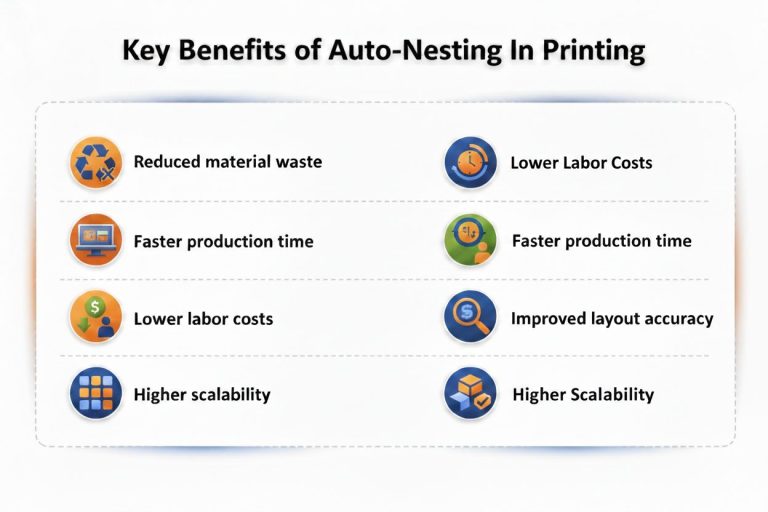
Here’s a list of top five benefits of Auto-nesting in printing:
1. Optimize Material Usage
Auto nesting algorithms are specifically designed to save space and material. Smart algorithms look at your film size, your design shapes, and design quantity, and then fit them together perfectly while utilizing every inch possible out of your gang sheet.
Lower material cost and more designs per sheet mean more profits!
2. Saves Your Valuable Time
Instead of hours, auto nesting prepares your gangsheets in seconds. This clears out the “pre-press” bottleneck and gets your designs onto the printer much faster. This boosts the overall production throughput.
3. Reduced Errors
It’s easy to mess up when you do things manually. A slight design overlap or a wrong margin on the sheet can ruin the whole print run. Auto nesting gangsheet tools remove the human error from the process and ensure every design is spaced perfectly and gangsheets are print-ready.
4. Higher Scalability
Whether you are printing 5 designs or 500, auto nesting smoothly handles a massive batch just as well as a small one. If you’re planning to scale your DTF business and take on more customers, you need to incorporate auto nesting in your processes.
5. Lower Labour Expenses
Since auto nesting automates most of the process, the need for extensive manual labor for planning and placement is minimized. Your staff can focus on more important things like printing, quality checks, and order handling.
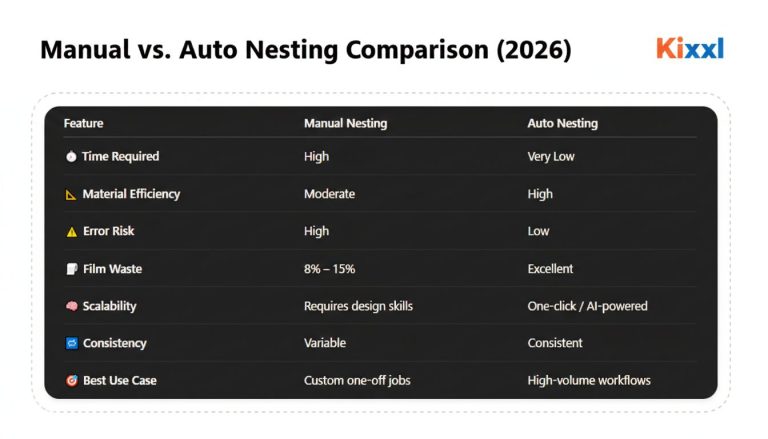
Manual Nesting Vs. Auto Nesting: A Comparison
Kixxl: The Smartest Auto-Nesting Solution for DTF Gang Sheets
If you are looking for the auto nesting solution that handles your DTF job perfectly, Kixxl is a top-tier choice because it offers:
Advanced Auto-Nesting Algorithm
Kixxl’s auto‑nesting uses intelligent optimization to fit designs perfectly on gang sheets with minimal gaps, saving you film and material.
End-to-End DTF Workflow Automation
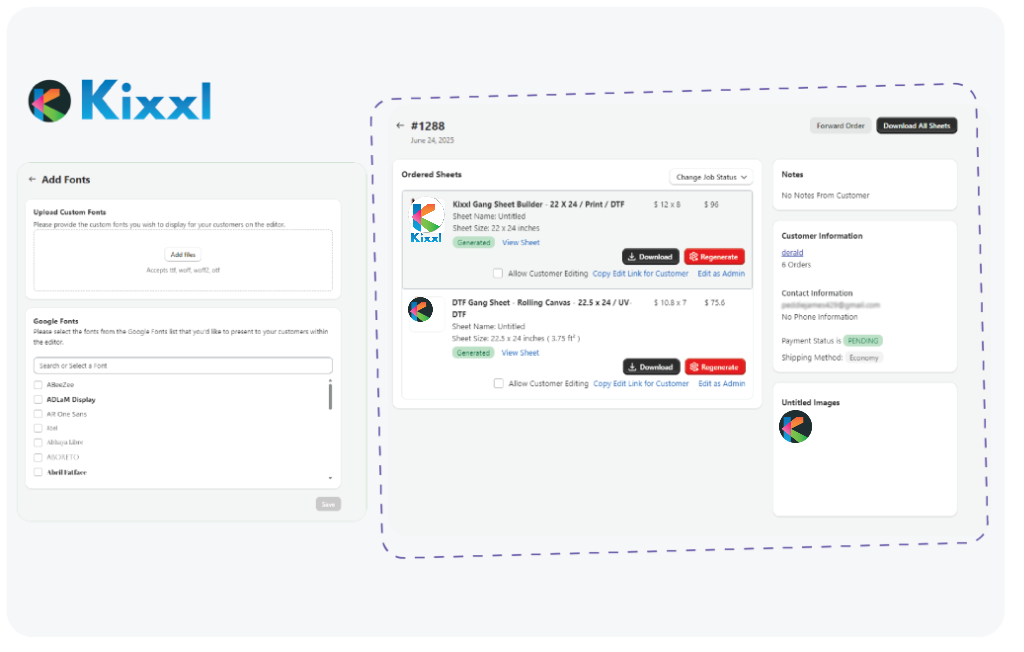
Beyond AI auto nesting, Kixxl automates trimming, background removal, image optimization, and even printing prep, so you spend less time on pre‑press and more on production.
No Design Expertise Required
Unlike tools that require design skills, Kixxl’s auto‑nesting is very user‑friendly. Even beginners can generate print‑ready gang sheets in seconds.
Built For Real DTF Shops
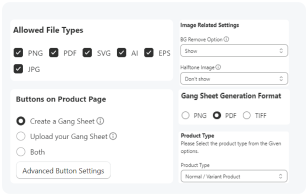
Kixxl includes features such as (auto trim, 300 DPI optimization, one-click background removal, transparent pixel remover) that are tailored for DTF workflows. Kixxl doesn’t just nest designs, it prepares them to print professionally.
Which One Should You Choose?
In the competitive world of DTF printing, the winner is usually the one who can produce high-quality transfers the fastest. Manual nesting is a relic of the past that consumes your time and increases film waste.
Nonetheless, manual nesting might still make sense if you have very few designs and don’t want the software learning curve. Moreover, if you need highly custom placements for artistic jobs.
Using an auto-nesting gang sheet tool, especially Kixxl, can turn a tedious 1-hour task into a 60-second one. With such a tool, you can fulfill orders faster, maximize your profits, and ultimately keep your customers happy and satisfied.
Smart Auto-Nesting Made for DTF Printing
Try now and get print-ready layouts in seconds!