Key Takeaways:
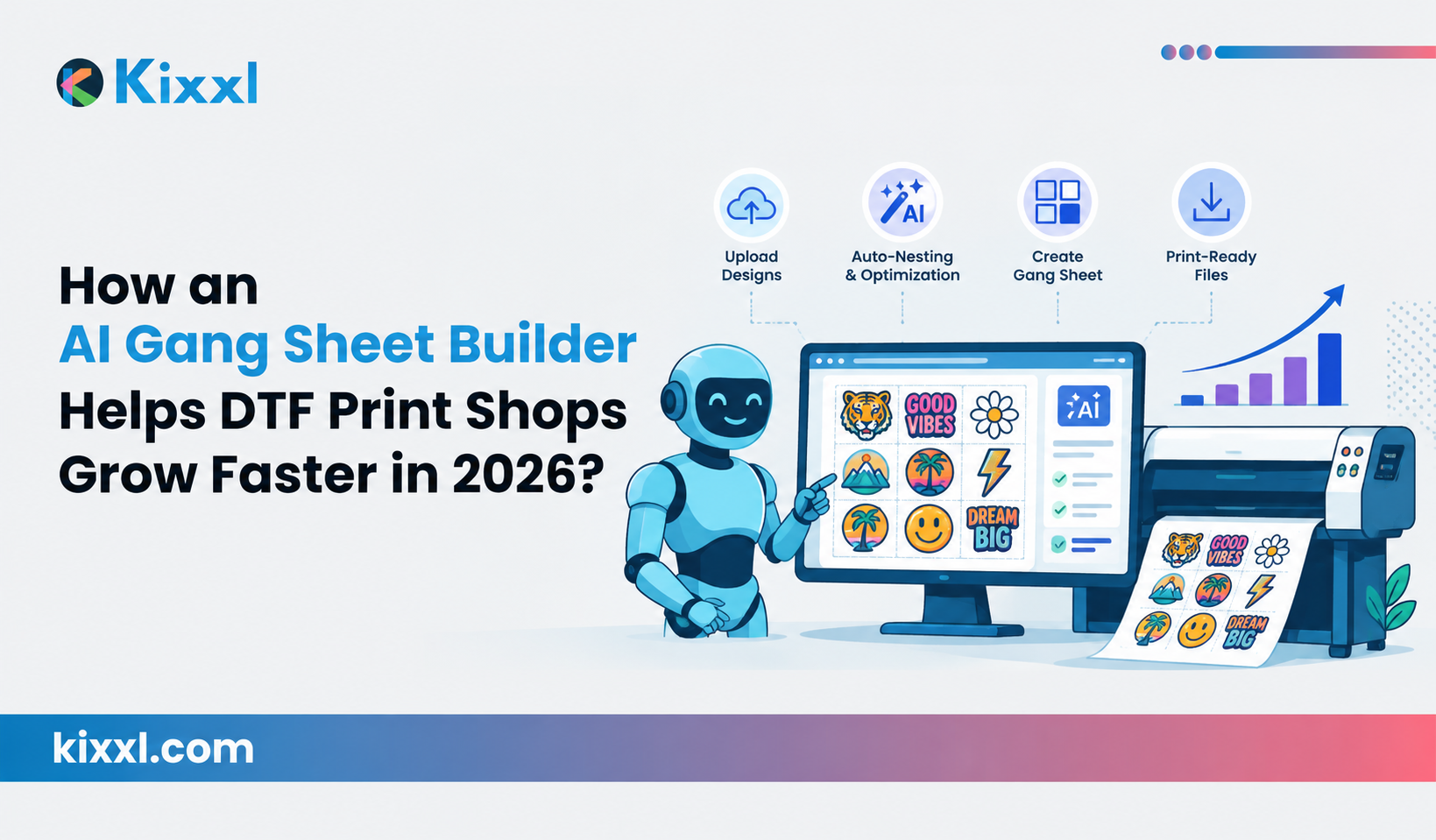
- An AI gang sheet builder automatically arranges multiple designs on a gang sheet, reducing manual layout work.
- AI can assist with tasks like nesting, image optimization, background removal, rotation, and artwork checks
- Kixxl combines AI gang sheet building with image editing, artwork checks, Shopify and WooCommerce integrations, and production workflow tools.
- Kixxl can automatically adjust uploaded images toward 300 DPI while also detecting issues such as low DPI, overlapping images, and semi-transparent pixels.
- Automation does not guarantee a specific increase in revenue or profit. Its main value is reducing repetitive work and creating a more consistent workflow.
Why Are DTF Shops Turning to AI?
DTF printing is growing, but printing more orders isn’t always the hardest part. Preparing artwork, arranging gang sheets, fixing image quality, and moving files into production can become the real bottleneck.
An AI-powered gang sheet builder can automate much of this prepress work.
Instead of manually arranging every design, checking image quality, removing backgrounds, adjusting artwork, and preparing files for printing, a modern gang sheet builder can automate many of these steps before the file reaches your printer or RIP.
For DTF print shops, custom apparel businesses, print-on-demand sellers, and Shopify merchants, this can mean less repetitive work, better use of film, fewer manual errors, and a workflow that can handle more orders without adding the same amount of manual work.
What "AI" actually does in a Gang Sheet Builder?
Here’s how an AI-powered Gang Sheet Builder Can Help Your Print Business:
1. AI Changes the Workflow
Manually arranging a gang sheet can become tedious when you’re dealing with dozens of designs.
You need to consider:
- Design dimensions
- Available film width
- Spacing
- Rotation
- Cutting requirements
- Empty areas
- Different artwork shapes
Doing this manually for every order takes time and makes consistency harder.
Here AI changes the workflow completely:
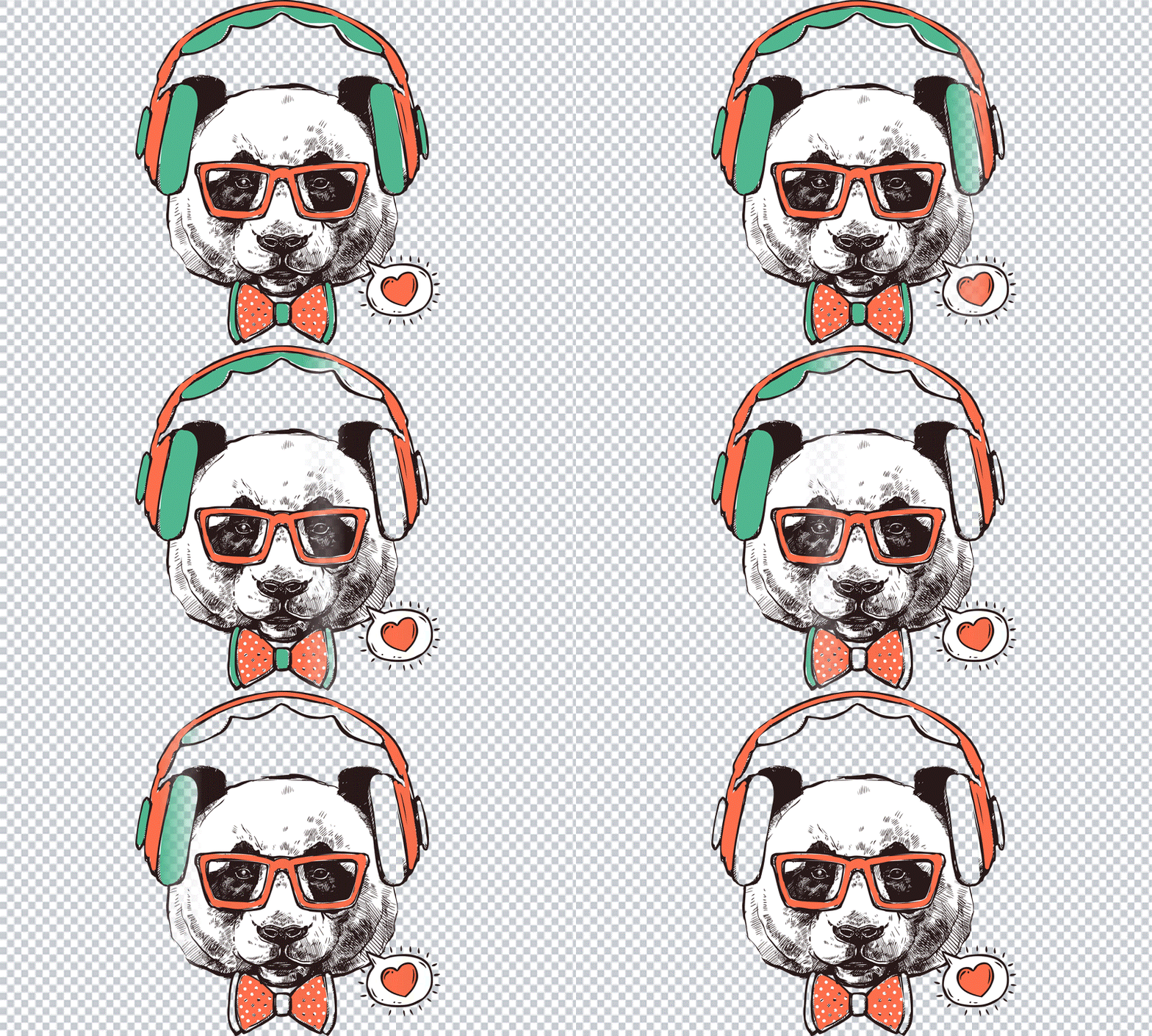
It lets you upload designs, enter quantities, and use AI Auto-Nesting to automatically arrange artwork on the gang sheet. with this feature, you can also rotate designs to help use available space more efficiently.
That means your operator can spend less time dragging and positioning individual files.
However, no nesting algorithm can guarantee the same material savings on every order.
A sheet containing rectangular designs may pack very differently from one containing irregular shapes. Margins, spacing, cut requirements, and printer specifications also affect the final layout.
So the practical goal is not simply “use less film at any cost.” but to “Create an efficient layout while keeping the file suitable for production”.
2. Catch Artwork Problems before printing & Get You Print-Ready Files
Not every customer uploads perfect artwork.
You may receive:
- Low-resolution images
- Images with unwanted backgrounds
- Designs containing excess transparent pixels
- Incorrect dimensions
- Files that need color adjustments
Without automation, someone on your team has to deal with these issues manually.
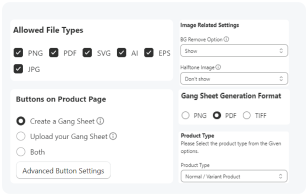
AI-powered Gang sheet builders can automatically optimize uploaded images toward 300 DPI, can remove background and semi-transparent pixels, knockout and replaces colors and halftoning.
3. Optimizes Every Inch of the Film
DTF film is a production cost.
Every unused area of a gang sheet represents material that wasn’t used for a design and that’s why nesting matters.
Imagine you have several designs:
Design A + Design B + Design C + Design D
If they’re manually placed with large gaps between them, you may end up with significant unused space.
A smarter layout by auto-nesting can rotate and reposition designs to use more of the available sheet. Moreover, few AI-powered Apps lets you continue using available sheet space rather than leaving unnecessary gaps.
4. Reduce Repetitive Prepress Work
A growing print shop can have plenty of orders but still struggle with capacity.
The issue isn’t always the printer. Sometimes the problem happens before the printer even starts.
Your operator may have to:
- Download customer files
- Check dimensions
- Remove backgrounds
- Fix transparent pixels
- Adjust resolution
- Arrange designs
- Create the gang sheet
- Export the file
- Rename the file
- Move it to the RIP or production folder
When every order follows this process manually, the small tasks add up. Automation can move many of these steps into one workflow.
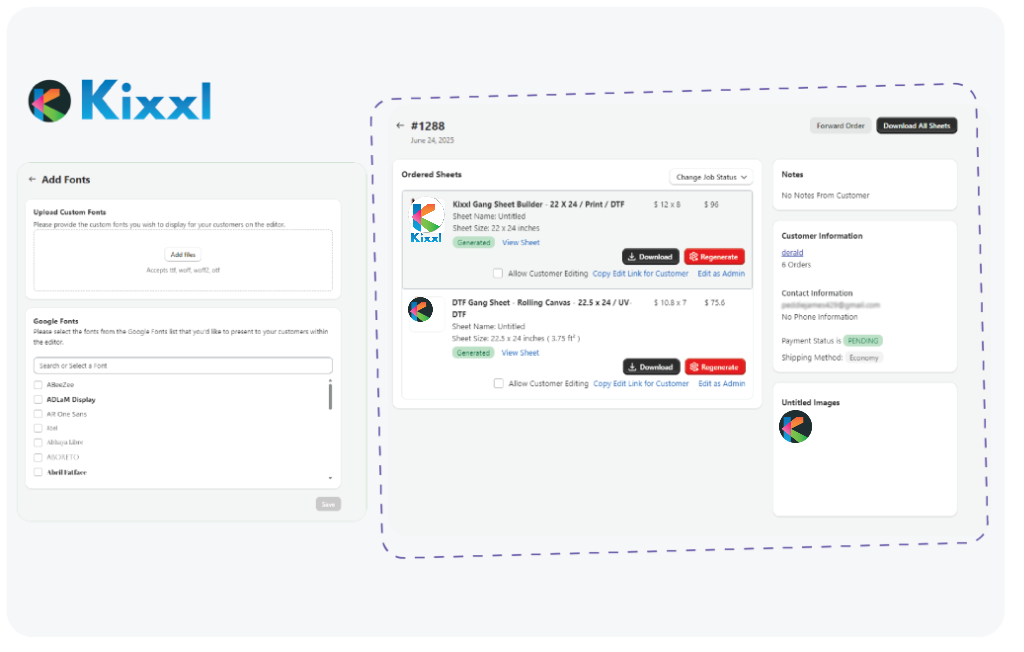
In addition to this, AI-powered gang sheet systems can also connect with cloud storage services like Dropbox or Google Drive through a Hotfolder Integration. This allows completed gang sheets to move into the next stage of the workflow with fewer manual file-handling steps.
The Result?
Your operator can spend more time on:
- Quality control
- Production
- Customer service
- Troubleshooting
- Higher-value work
rather than repeatedly preparing the same type of file.
5. Make It Easier for Customers to Submit the Right Artwork
AI automation becomes even more useful when the customer is part of the workflow.
For Shopify and WooCommerce stores, customers can upload designs through an integrated Kixxl experience instead of sending artwork separately through email or other channels.
Kixxl supports Shopify and WooCommerce integrations and can allow customers to upload, customize, and finalize designs before the order moves into the merchant’s workflow.
This can help reduce a common problem for custom-product businesses:
“The order is placed, but the artwork is still somewhere in the customer’s email inbox, Google Drive, or Dropbox.”
Instead:
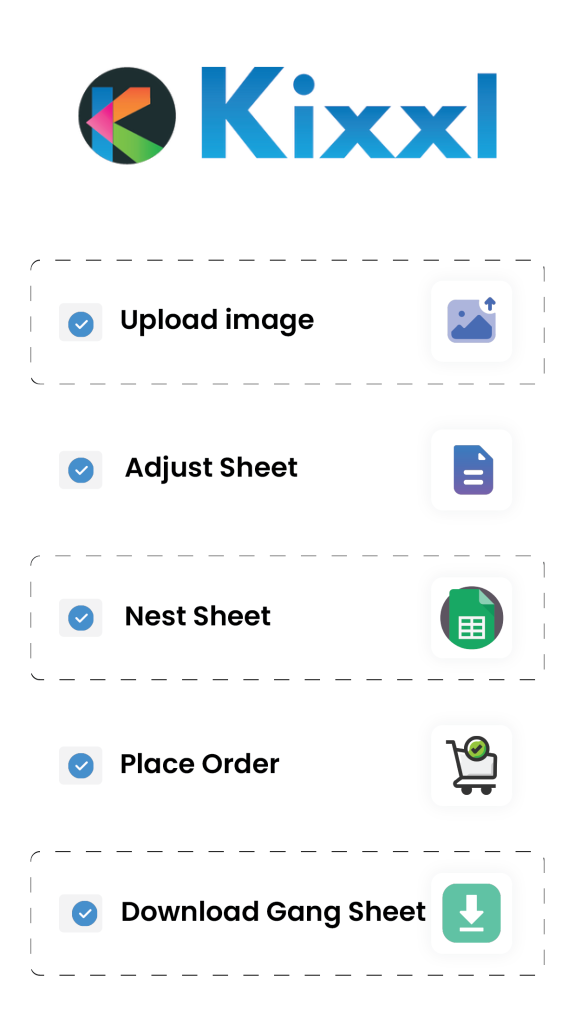
Product → Upload artwork → Customize → Order → Production
That creates a more connected customer-to-production workflow.
What Slows Down DTF Shops, Even With AI?
You are using a great Gang sheet builder app and still your shop’s growth is limited. Here’s why:
- Using AI Only for Nesting
An AI builder can optimize layouts, but shops may still handle artwork cleanup, white-channel preparation, order processing, and RIP setup manually. This leaves other bottlenecks untouched. - Manually Checking Every AI-Generated Sheet
If operators spend the same amount of time reviewing and adjusting every sheet, much of the automation benefit disappears. - Ignoring Artwork Quality
Low-resolution files, unnecessary backgrounds, oversized canvases, and incorrect sizing can still cause poor prints and reprints. AI nesting cannot fix every artwork problem unless the builder also includes tools such as background removal, upscaling, and file optimization. - Not Tracking Film Utilization
Faster nesting does not automatically mean lower costs. Shops should monitor how much usable film they get from each sheet and identify recurring areas of wasted space. Efficient nesting directly affects material costs and throughput. - Keeping Orders and Production Separate
If orders still arrive through email and DMs, you may spend more time finding and matching artwork than producing transfers. Connecting customer orders directly to the production workflow can remove this friction. - Not Automating the RIP Handoff
A production-ready gang sheet still needs to reach the printer efficiently. Hotfolders, automated file routing, and standardized RIP settings can solve this problem. - Using the Same Workflow as Order Volume Grows
A process that works for 10 sheets a day may become a bottleneck at 50. As volume increases, shops need to automate more than nesting, including order intake, file preparation, production routing, and QA. - Focusing on Speed Instead of the Whole Production Workflow
The goal isn’t simply to create gang sheets faster. The bigger opportunity is to reduce the time from customer order → artwork preparation → gang sheet → RIP → printing → fulfillment.
AI Does Not REPLACE the Print Shop, It Automates the entire WORKFLOW
Even after automating the entire workflow of a print shop with AI, final production still requires human judgment, equipment, quality control, and appropriate print settings.
here’s an overview of what AI automates in the DTF workflow:
| Task | Manual workflow | AI-assisted workflow |
|---|---|---|
Arrange designs |
Manually position each design |
Automatic Nesting |
Image rotation |
Rotate designs individually |
Auto Rotate |
DPI handling |
Check and adjust manually |
Automated 300 DPI adjustment |
Background removal |
Use separate software |
One-click background removal |
Transparent pixels |
Inspect artwork manually |
Detection and cleanup tools |
Empty spaces |
Adjust layouts manually |
Fill Empty Space |
Artwork issues |
Find problems during prepress |
Automated artwork warnings |
Order workflow |
Move files between systems |
Ecommerce integration |
Production handoff |
Manual file transfer |
Hotfolder Integration |
How Kixxl Helps DTF Businesses Build a More Connected Workflow?
For a print shop, the goal is simple: spend less time preparing files manually and more time producing orders, fulfilling them, and growing your business.
That’s where Kixxl comes in. Built specifically for DTF businesses, Kixxl uses AI-powered features to simplify the tedious parts of file preparation and bring more of your DTF workflow into one easy-to-manage system.
For Shopify merchants, the workflow can start with a customer placing an order and continue through artwork preparation and gang sheet creation.
Kixxl also integrates with WooCommerce, helping businesses turn product designs into print-ready gang sheets.
On the production side, Kixxl offers advanced Image editing tools & features that help print shops improve image quality, and create cleaner, more print-ready files before production.
So, an AI gang sheet builder doesn’t have to be just a “tool for arranging images.” It can support more of your DTF workflow in one place.