
The Hidden Bottleneck Slowing Down Every Growing DTF Shop
Most DTF shop owners don’t struggle to find customers. They struggle with prepress. Orders come in faster than one person can lay out designs, space them, and export a gang sheet. The usual fix is hiring another person that costs a lot. Also, it doesn’t speed things up as much as you’d hope. Moreover, now two people have to agree on how sheets get built, and that takes time too.
The shops that grow past this point don’t just buy bigger printers or hire even more staff. They simply stop doing gang sheet layout by hand and let software do it instead.
Most Shops Get Stuck Here:
This usually starts happening when a shop reaches around 15 – 40 orders a day:
- Same-day orders take 3 – 4 days.
- The owner is doing prepress work at night instead of running the business.
- Reviews start mentioning slow turnaround instead of print quality.
- Adding a second printer doesn’t solve the problem because the real bottleneck is layout work.
At this point, shops either keep struggling to keep up or use an AI-powered Gang sheet builder to automate the layout work and save time.
Here's How shops Actually Grow, Step by step:
Stage 1: Just Starting Out (0 –10 orders/day)
One printer, one person, orders coming in from Etsy or word of mouth. At this point, manual prepping is totally fine. You don’t have enough volume for it to hurt you. Your real bottleneck is finding customers, not producing for them. Spend this stage learning your equipment and building a name for yourself.
Typical revenue: $5K–$15K/month.
Stage 2: The Prepress Wall (10–30 orders/day)
At this point orders keep coming, but prepping each gang sheet takes 60 –180 minutes. Your inbox backs up. A 2-day turnaround becomes 5 days. Reviews start mentioning “slow”.
Now, you have two options:
- Hire a second prepress person — roughly $90K–$110K a year, fully loaded.
- Automate prep with an online gang sheet tool — roughly $40–$160 a month.
The math isn’t close. A good automated builder can take you from 25 orders a day to 50 –100, for a fraction of a single hire’s monthly cost.
Typical revenue: $15K–$30K/month.
Stage 3: Online Ordering Goes Live (30–100 orders/day)
Now customers upload their own designs through a builder on your website. Files come out print-ready. What used to take 90 minutes of manual work now takes about 5. One operator can suddenly manage 50 –100 orders a day. You’ll likely add a second printer here to keep pace.
Typical revenue: $30K – $100K/month.
Stage 4: Multi-Shift, White-Label (100–500 orders/day)
Prepress is fully automated by now, so the bottleneck shifts to printer capacity and shift coverage. This is also where B2B starts to matter. Apparel brands, screen printers, and schools want their own branded ordering page, backed by your production. You’ll likely bring on a production manager (a hire that’s actually worth it, unlike the prepress one) plus QA staff.
Typical revenue: $100K–$500K/month.
Stage 5: Multi-Location / Franchise (500+ orders/day)
Multiple production sites, regional shipping, one shared brand. At this scale, manual prepress simply can’t work. Also, there’s no way to keep quality consistent across different cities with different people doing layout by hand. Only automated, rule-based prep can guarantee the same output everywhere.
Typical revenue: $500K+/month, scaling toward $5M+/year.
One Step Further, Every 12–18 Months:
Going from solo founder to multi-location business in under five years is realistic but only with automation underneath it. Shops that try to skip stages without it usually stall: the cost of coordinating manual work at scale eats margins faster than revenue can grow.
The shops scaling fastest right now treat their gang sheet builder as core equipment, as essential as the printer itself, not an optional add-on.
Mistakes That Slow Shops Down:
- Hiring before automating. A second prepress hire just becomes the next bottleneck once demand grows again and now you’re coordinating two people instead of one.
- Building your own ordering software. AI nesting and auto-layout tools take 12–24 months to build properly. Using an existing tool gets you there in months, not years, at a fraction of the cost.
- Not tracking time per order. If you don’t measure it, you won’t notice when manual prep quietly becomes unprofitable. Check it quarterly; once you’re above 30–45 minutes per order, automating already pays for itself.
- Spending on ads before fixing production. Driving more orders into a backed-up manual workflow just makes the backup worse. Fix the bottleneck first, then turn up marketing.
How To Move Forward with Gang Sheet Automation:
Your Next Move Should be:
- Time-track 10 orders end-to-end. Over 30 minutes each? You’re already past the point where automating pays off.
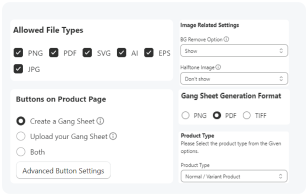
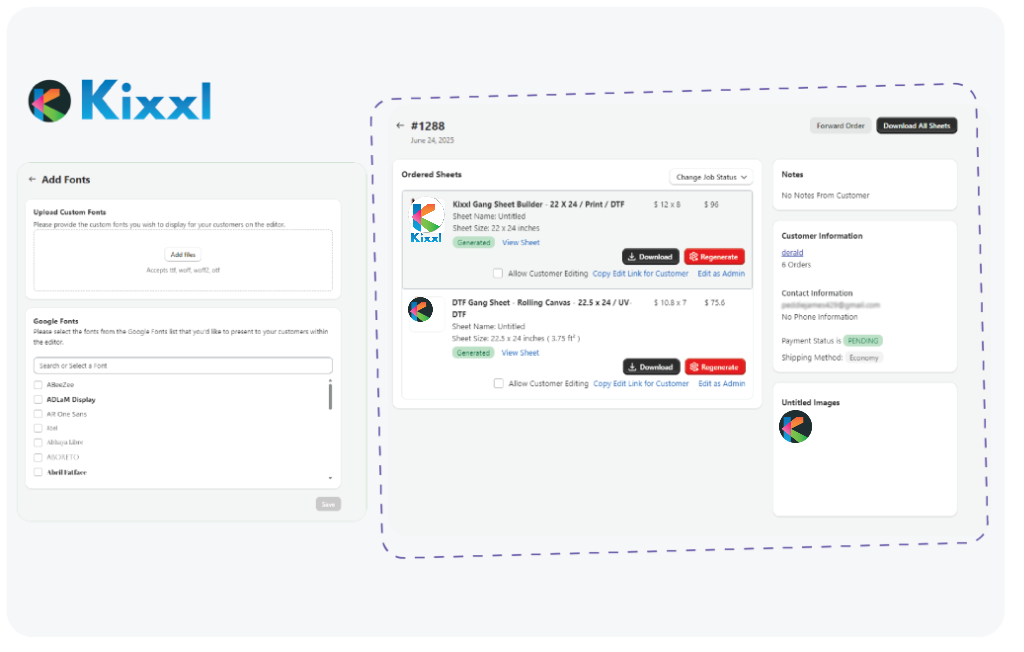
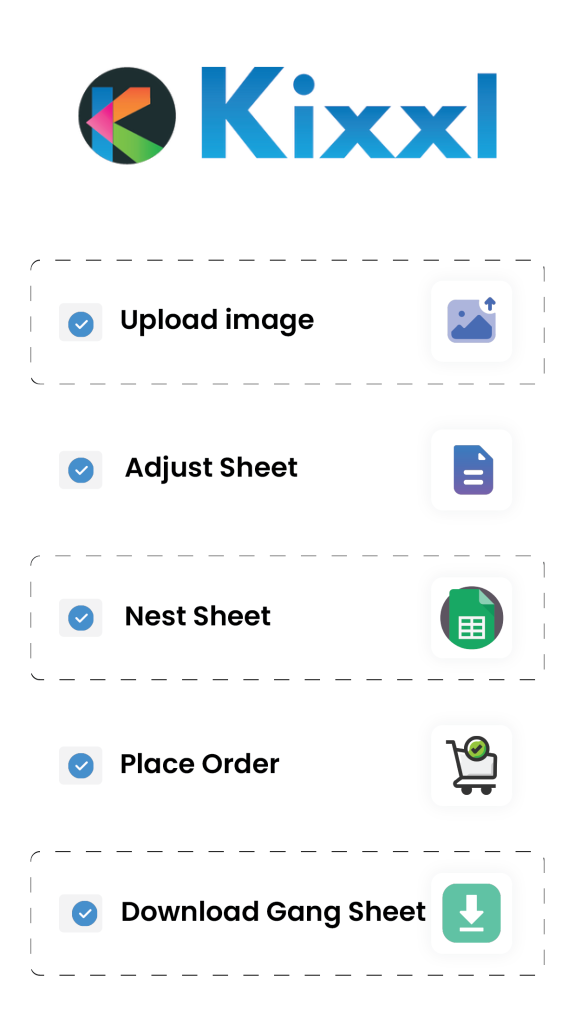
- Add an online gang sheet builder to your storefront. Most integrate with Shopify, WooCommerce, or a custom site in minutes.
- Run 10–20 real orders through it and compare against your manual process.
- If quality holds up, move everything over. Keep manual as a backup for edge cases only.
- Track your new daily capacity for a month. Most shops see 2–3x within 30 days.
- Put the freed-up hours into production, support, or sales, not back into prepress.
See the Difference for Yourself
Compare your current turnaround time to what Kixxl can do. Most shops see 2–3x capacity within the first month.